



Winter lawn care in Fate, from December to March.

New sod on a new-build lot near Fate. Young lawns like this one get a few special winter rules, covered below.
A brown Bermuda lawn in Fate in December is dormant, not dead. From now through March, winter lawn care here comes down to four jobs: run the sprinklers one day a week at most (and usually not at all), keep traffic off wet clay and frosted grass, stop winter weeds before they flower, and put down a spring pre-emergent in late February, before crabgrass sprouts in early March.
This guide is written for Fate yards: Blackland Prairie clay, water bought from the North Texas Municipal Water District, and, for homes in a subdivision, an HOA rulebook on top of the city's. Below is what to do, month by month, and what the city and state rules actually say.
What your Fate lawn is doing right now
Fate sits on the Blackland Prairie in Rockwall County, where the soils run from loam to clay at the surface over clay subsoils that crack when they dry out. January lows average 34°F.
Bermuda, zoysia and St. Augustine are warm-season grasses. As nights turn cold, usually starting in November, they go dormant and stay tan until spring green-up. That is normal, and it is not a sign the lawn needs water or fertilizer.
After the first frost you may see a leopard-print pattern of green and brown in a Bermuda lawn. That is cold injury to the leaf blades as the grass goes dormant, and it evens out to a uniform tan after a few more freezes. It is not a disease and needs no treatment.
Hold the fertilizer for now. Texas A&M AgriLife says not to feed Bermuda until it has fully greened up in spring, because grass uses nutrients only while it is actively growing.
Winter watering: Fate's rules and what the lawn needs
Fate buys its treated water from the North Texas Municipal Water District (NTMWD), which draws from Lavon Lake. The city's water conservation plan, adopted in April 2024, follows the district's year-round schedule:
- November 1 through March 31: sprinklers and irrigation systems may run no more than one day a week. The plan itself says less than once a week, or not at all, is usually enough.
- Your days: addresses ending in 0, 2, 4, 6 or 8 water on Monday and Thursday. Addresses ending in 1, 3, 5, 7 or 9 water on Tuesday and Friday. In winter, use one of those days, not both.
- Hours: no lawn watering between 10 a.m. and 6 p.m.
- Always allowed: a hand-held hose with a shutoff nozzle, drip zones and soaker hoses, as long as no water runs off.
- Counted as water waste: watering during rain or a freeze, spraying the street, sidewalk or driveway, and runoff leaving the yard.
Less is better on clay in winter. NTMWD points out that clay soil holds water even longer in winter because so little evaporates, and Texas A&M AgriLife warns that over-watering in fall and spring raises the risk of large patch and take-all patch, two common lawn diseases. For most Fate controllers, the right setting from December through February is off, with a hand watering only after a long dry, windy stretch.
If you want a second opinion each week, Fate's water report recommends WaterMyYard.org, a free Texas A&M AgriLife program that sends weekly advice on whether to run your system at all.
Before a hard freeze, make sure the system cannot come on overnight. Sprinkler water that hits pavement on a freezing night turns to ice on sidewalks and streets, which is one reason NTMWD asks customers to switch systems off for winter. Fate's plan requires working rain and freeze sensors, or a smart controller, on new irrigation systems. If your system has one, test it before the first hard freeze.
New sod is the exception. AgriLife lists newly laid sod among the cases where winter watering should not be cut back. If your builder laid sod this fall, check it during dry spells and hand water as needed so the roots don't dry out.
In a Fate winter, the most useful lawn tool you own is the off switch on the sprinkler controller.
Clay and frost: stay off the lawn
Clay compacts quickly under feet, mowers and tires, and once it does, water runs off instead of soaking in. Wet winter clay is the easiest to compact, so keep cars, trailers and extra parking off the grass during rainy weeks.
Frost adds a second reason. Walking on frosted grass breaks the frozen blades and wears down the dormant canopy that carries the lawn through winter. Wait until the frost melts before you cut across the yard, and keep foot traffic on the sidewalk on cold mornings.
Aeration is the fix for compacted clay, but it belongs in spring, once the grass is growing again and can fill the holes. Put it on the calendar for after green-up, not January. Our aeration page covers what it does.
The date that matters most: spring pre-emergent
Crabgrass usually starts sprouting in early March in North Texas. A pre-emergent herbicide only stops seeds that have not come up yet, so it has to go down first.
The Rockwall County Master Gardeners put the window in late February: apply when soil temperatures stay above 55°F, which in Rockwall County usually happens about two weeks before the average last freeze of March 15.
You can check it yourself. Texas A&M AgriLife suggests a soil thermometer, or even a kitchen meat thermometer, pushed into the top inch of soil where most weed seeds sit. Apply once it reads about 55°F for several days in a row.
Four habits keep a pre-emergent working:
- Water it in. It has to be carried into the soil by rain or irrigation before the weeds emerge. Time it ahead of a light rain, or use your one winter sprinkler day.
- Skip the nitrogen. AgriLife recommends a product with little or no nitrogen this early, and advises against weed-and-feed products while the grass is not actively growing. A February weed-and-feed fertilizes a lawn that cannot use it.
- Go easy on young sod. Pre-emergents can injure newly established lawns. If your yard was sodded in the last few months, check the label for new-turf limits first.
- Plan the second round. The Rockwall County Master Gardeners note that a second application in June is needed because Texas summers are long.
A pre-emergent will not touch weeds that are already up, like henbit and chickweed. Those are covered in our winter weed control guide. One timing tip if you spot spray: AgriLife notes that herbicides for clover and similar cool-season broadleaf weeds do not work when daytime temperatures are below 60°F, so wait for a mild afternoon.
HOA yards: what the city and Texas law say
If your home is in an HOA, you have two rulebooks. The City of Fate says plainly that it does not enforce HOA requirements, so meeting the city's rules does not settle what your HOA expects, and the reverse is true too.
A tan, dormant lawn in January is normal for warm-season grass. If you want the yard to look cared for through winter, the color of the grass is not the lever. These are:
- Leaves cleared off the turf every week or two
- Winter weeds pulled or treated before they flower
- Beds edged and mulched
- Brush at the curb only on trash day (Fate's limits are below)
Two Texas laws are worth knowing:
- Property Code Section 202.007 bars an HOA from prohibiting drought-resistant landscaping or water-conserving natural turf. The HOA can ask you to submit a plan first, but it may not unreasonably deny it.
- Property Code Section 202.008, in effect since September 1, 2025, bars an HOA from fining you under rules that require green grass or ban brown or discolored grass while a drought watering restriction from your city or water supplier is in place, and until 60 days after it is lifted. Fate's permanent winter schedule is not a drought restriction, so this applies only if drought stages are declared.
Planning new beds or a different turf for spring? Winter is a good time to send the plan to your HOA, so the approval is in hand before planting season.
One thing to skip: overseeding with ryegrass for a green winter lawn. Fate's water conservation plan lists overseeding or sodding with cool-season grasses, or watering them, as water waste, with exceptions only for golf courses and athletic fields.
Brush, leaves and Fate's trash pickup
Winter pruning and leaf cleanup build a pile fast. Fate's trash service, Waste Connections, picks up brush at the curb on your regular trash day:
- Up to ten 30-gallon bags, or four tied bundles no larger than 3 by 3 by 3 feet
- No single piece longer than 4 feet
- More than four cubic yards: call Waste Connections at 972-289-6714 for an estimate
- Dirt, rock and sod are not collected
Pickup runs a day late after Christmas Day and New Year's Day. As for the leaves, a wet mat left on the lawn blocks light and air from the turf underneath. Our fall cleanup checklist covers how often to clear them.
A Fate winter lawn calendar
December
- Switch the sprinkler controller to off, or to one day a week at most on your assigned day.
- Test the rain and freeze sensor before the first hard freeze.
- Clear leaves every week or two so they don't mat down on the turf.
- Stay off frosted grass until it melts.
January
- Pull a soil sample. AgriLife suggests a soil test at least every other year, and the Texas A&M soil lab in College Station accepts mailed samples. The results tell you what to feed in spring, and our soil pH guide explains the pH number.
- Hand-pull or spot-treat winter weeds on a mild afternoon, before they flower.
- Send any spring landscape plans to your HOA.
February
- Buy a pre-emergent with little or no nitrogen.
- Start checking soil temperature in the top inch.
- In late February, once it holds near 55°F for several days, apply and water it in.
March
- Expect crabgrass to start sprouting in early March. Rockwall County's average last freeze is March 15.
- Hold fertilizer until the lawn is fully green.
- The one-day sprinkler limit runs through March 31. From April 1, Fate allows up to two days a week.
- Book aeration for after green-up.
Want a hand with it?
Mahalic and Sons runs routes through Fate every week. The first visit of our 8-step program is a late-winter pre-emergent, and we track that window each year so it goes down before the weeds come up. See what's included on our Fate fertilization and weed control page and Fate mowing page, or start at lawn care in Fate. Quotes are free.
More From Turf Talk
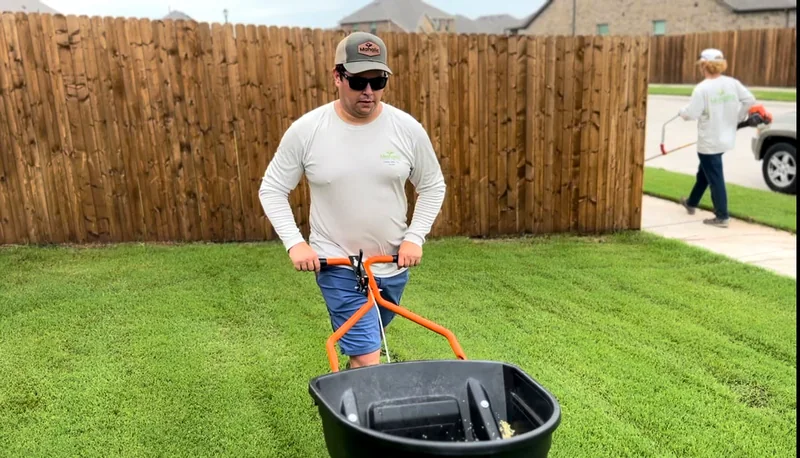
Winter Weed Control for North Texas Lawns
Why winter weeds show up in dormant North Texas lawns, how to tell them apart, and what to do now so spring starts cleaner.
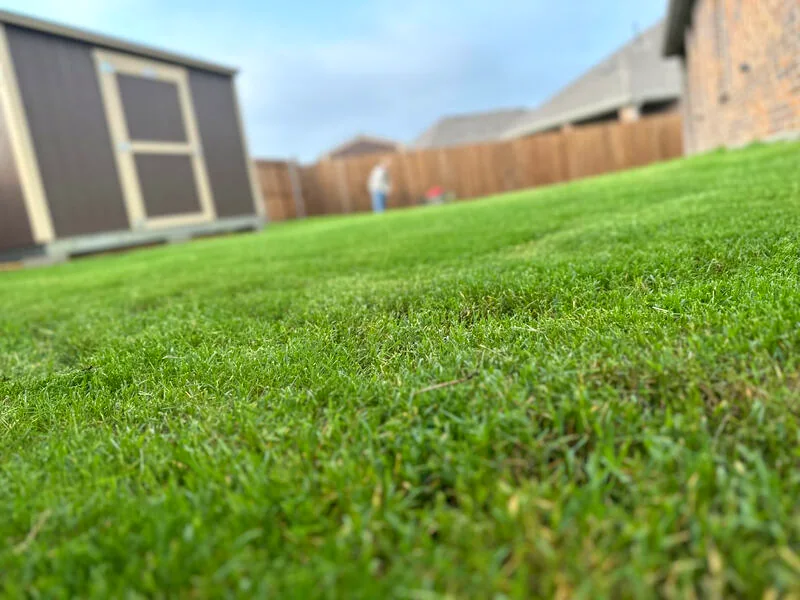
How Much & How Often to Water Bermuda and Zoysia Lawns
The simple weekly watering rule that keeps North Texas lawns deep-rooted and drought-resilient.
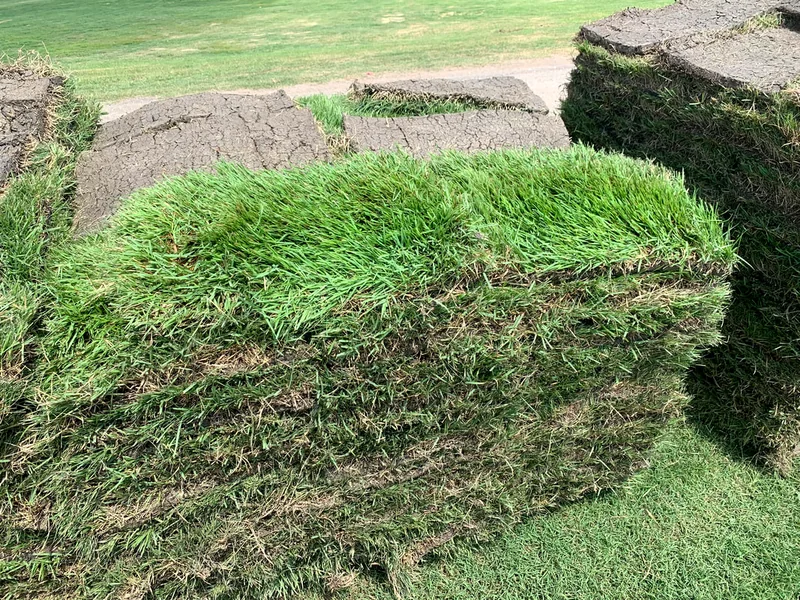
What Your Soil pH Is Telling You
Why acidity and alkalinity quietly decide how well fertilizer actually works.